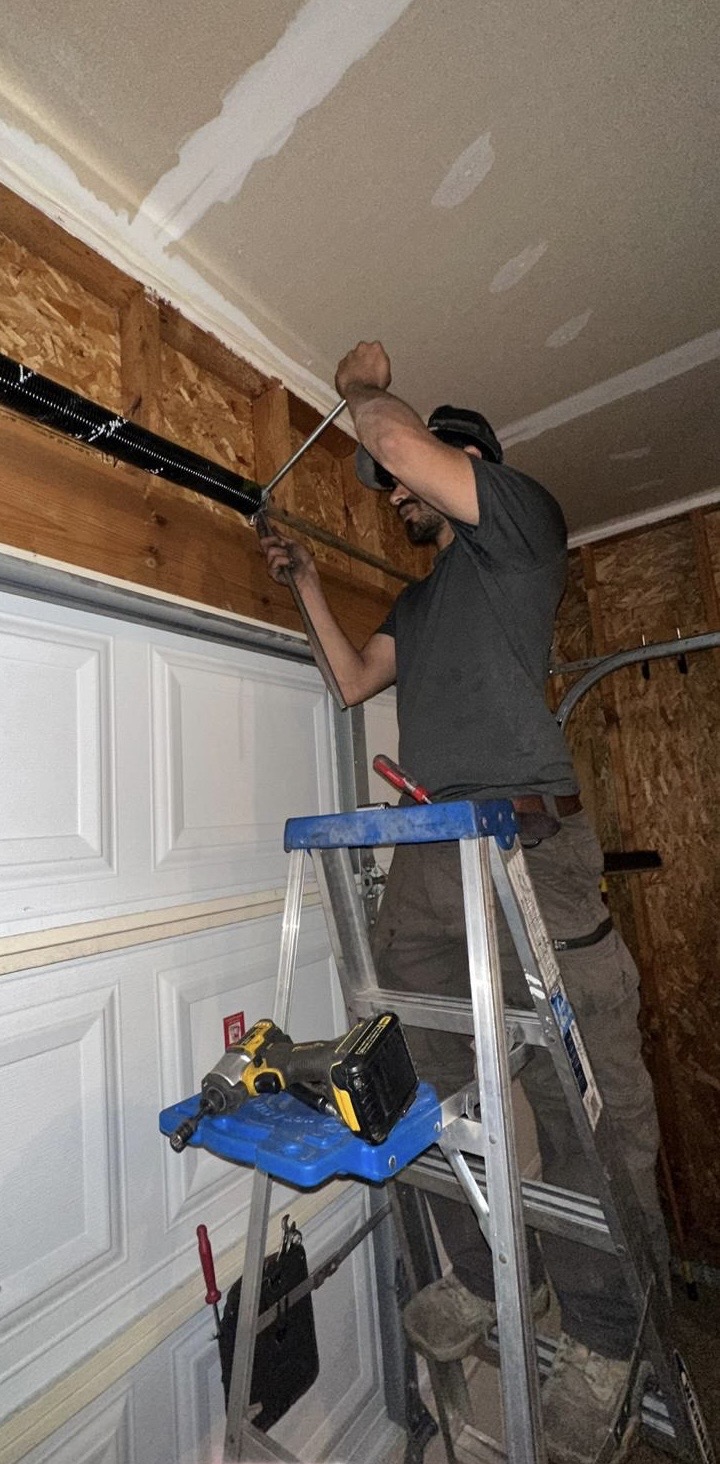

A garage door can weigh hundreds of pounds, yet a properly functioning door may seem surprisingly easy to open. Much of that work is handled by the Garage Door Springs. These components counterbalance the weight of the door so the automatic opener does not have to lift the entire load by itself.
Because springs repeatedly store and release energy, they experience significant stress every time the garage door operates. Eventually, even a properly installed spring reaches the end of its service life.
For homeowners in West Bloomfield, Southfield, Novi, Troy, Farmington Hills and Northville, Michigan’s seasonal temperature changes and frequent garage use can make spring condition especially important. Recognizing the warning signs of deterioration can help homeowners arrange professional Garage Door Spring Replacement before a malfunction causes additional problems.
What Do Garage Door Springs Actually Do?
Garage door springs make a heavy door manageable.
When the door closes, the spring system stores energy. When the door opens, that energy helps counterbalance the door’s weight. This allows the door to move smoothly whether it is being operated manually or by an automatic opener.
Residential garage doors commonly use one of two spring systems.
Torsion Springs
Torsion springs are generally installed horizontally above the garage door on a metal shaft. As the door closes, the springs wind and store energy.
These systems are common on modern residential garage doors, including larger and heavier doors.
Extension Springs
Extension springs are normally positioned along the horizontal tracks on either side of the garage door. They stretch as the door closes and contract as it opens.
They are frequently found on older or lighter garage door systems.
Both types operate under considerable tension, which is why spring adjustment and replacement should be performed professionally rather than treated as a routine DIY repair.
Why Do Garage Door Springs Break?
A spring may appear to break suddenly, but the failure is usually the result of wear that has accumulated over thousands of operating cycles.
Several conditions can contribute to spring failure.
1. Normal Wear From Repeated Garage Door Cycles
Normal use is the most basic reason springs eventually break.
One complete opening and closing of the garage door counts as a cycle. A household using its garage as the main entrance may complete several cycles every day.
Magic Fix Garage Door Services notes that standard springs are commonly associated with approximately 10,000 operating cycles, although spring specifications and actual service life vary.
Consider a family that operates its garage door four times every day. That equals approximately 1,460 cycles annually. A busy household using the garage even more frequently accumulates spring cycles faster.
Eventually, repeated metal fatigue can result in failure.
2. Frequent Daily Garage Door Use
How often you use the door matters just as much as how old the springs are.
This is particularly relevant in communities where attached garages serve as primary household entrances.
In Novi, for example, multi-car households and frequent garage usage can contribute to spring wear. Magic Fix also notes that heavier insulated doors are found in newer homes and require appropriately matched spring systems.
Similarly, Troy households with frequent commuting can accumulate operating cycles quickly.
A seven-year-old spring on a lightly used garage may have experienced fewer cycles than a four-year-old spring on a door that operates repeatedly throughout every day.
3. Michigan’s Changing Seasons
Michigan garage doors have to function through substantial seasonal changes.
Winter temperatures followed by warmer spring and summer conditions repeatedly expose metal components to changing environmental conditions. Moisture can also contribute to corrosion when metal remains inadequately protected.
Magic Fix identifies seasonal temperature changes as one of the factors affecting spring systems in communities including Novi and Northville.
This does not mean cold weather automatically breaks a healthy spring. Instead, environmental conditions can combine with age, corrosion, and existing metal fatigue.
A heavily worn spring may simply happen to reach its failure point during a period of demanding weather.
4. Corrosion and Rust
Rust is more than a cosmetic problem on a spring.
Corrosion affects the metal surface and can contribute to deterioration. Garage environments may expose hardware to humidity, moisture, road salt residue, and seasonal condensation.
Homeowners should visually inspect springs periodically without touching, loosening, or attempting to adjust them.
If substantial corrosion appears on an aging spring, professional inspection is a safer option than waiting to see how long it continues operating.
5. Incorrect Spring Size
Not every spring is appropriate for every garage door.
Spring specifications must correspond with characteristics such as the door’s weight and size. Installing a spring simply because it physically fits does not mean it is properly matched.
Magic Fix Garage Door Services notes that incorrectly matched spring size or tension can affect door balance and contribute to premature wear elsewhere in the garage door system.
This is another reason Garage Door Spring Replacement should involve proper spring selection rather than choosing replacement hardware based solely on appearance.
6. Problems Elsewhere in the Garage Door System
Springs work as part of a larger mechanical system.
Worn rollers, damaged cables, track alignment problems, and other hardware issues can affect garage door movement. Magic Fix includes inspection of rollers, cables, and track alignment as part of its spring-repair process because these components may contribute to or be affected by a spring problem.
Replacing a broken spring without examining the surrounding system could leave another problem unresolved.
Warning Signs Your Garage Door Springs Need Attention
Sometimes a spring breaks with little obvious warning. In other cases, the garage door begins behaving differently beforehand.
Knowing what to watch for can help homeowners recognize when professional inspection is needed.
The Garage Door Feels Extremely Heavy
A properly balanced garage door receives substantial lifting assistance from its springs.
If the spring fails, the true weight of the door becomes much more noticeable. The opener may struggle or fail to lift it.
A suddenly heavy door is a strong reason to stop operation and arrange service.
You Hear a Loud Bang From the Garage
One of the classic signs of a broken torsion spring is a sudden bang.
Homeowners sometimes mistake the noise for an object falling inside the garage. The sound can occur when the spring releases its stored energy after breaking.
Magic Fix identifies a loud bang or snapping noise as a common indication of spring failure across its Michigan spring-repair services.
If you hear this sound, inspect the garage door from a safe distance before attempting to operate it.
The Opener Runs but the Door Barely Moves
An automatic opener should not have to compensate for a broken spring.
If you press the remote and hear the opener motor operating while the door barely moves—or does not move at all—the spring system may no longer be providing the necessary counterbalance.
Continuing to activate the opener can place unnecessary strain on its motor and other components. Magic Fix specifically advises homeowners to stop using the opener when a spring has failed.
The Garage Door Looks Crooked
Uneven movement can indicate a spring, cable, or related balance problem.
One side of the door may appear lower than the other, or the door may rise at an angle.
Do not continue repeatedly opening and closing a crooked garage door. Uneven operation can affect rollers, tracks, cables, and other hardware.
There Is a Visible Gap in the Spring
A broken torsion spring may show a noticeable separation in the coil.
From a safe position, look at the spring mounted above the garage door. An obvious gap where the coil has separated can indicate that the spring has broken.
Do not touch the spring to confirm the problem.
Spring Concerns in West Bloomfield
Garage doors in West Bloomfield can experience frequent use along with Michigan’s seasonal temperature and moisture changes.
Magic Fix Garage Door Services identifies daily use and natural wear as common contributors to spring weakening and provides spring replacement for both torsion and extension systems in the area.
Homeowners should pay attention to door balance, new noises, visible spring deterioration, and an opener that suddenly begins struggling.
Spring Concerns in Southfield
Many Southfield homes have established garage door systems that may have accumulated years of operating cycles.
Local factors identified by Magic Fix include frequent garage use, seasonal temperature fluctuations, moisture exposure, and aging garage systems.
If an older spring has begun producing unusual symptoms, professional inspection can determine whether Garage Door Spring Replacement is necessary.
Spring Concerns in Novi
Novi includes both established neighborhoods and newer developments, meaning garage doors can vary considerably in age and construction.
Newer insulated doors may also be heavier than some older designs. Whatever the door style, its springs must be correctly matched to its weight.
High daily usage, humidity, temperature changes, and heavier insulated doors are among the spring-wear factors Magic Fix identifies for Novi homeowners.
Spring Concerns in Troy
Busy households in Troy may use their garages repeatedly for commuting, school, errands, and everyday activities.
Each operation adds another cycle to the spring system.
Magic Fix identifies frequent garage use, cold winter conditions, exposure to road salt, and heavier insulated doors among considerations affecting springs in Troy.
Rather than judging spring condition by age alone, homeowners should consider both usage and changes in garage door performance.
Spring Concerns in Northville
Garage door systems in Northville can range from older equipment at established properties to modern systems in newer homes.
Magic Fix notes that this mixture of historic and newer properties creates considerable variation in spring systems and that seasonal temperature changes can contribute to wear.
Older equipment deserves particular attention when the door’s service history is unknown.
Should You Replace Both Springs If Only One Breaks?
Some garage doors use two springs.
When both were installed at the same time, they have generally completed similar numbers of operating cycles. If one fails from ordinary fatigue, the other may also have accumulated substantial wear.
Whether both should be replaced depends on the spring system, age, condition, and specifications. A technician can evaluate the complete setup and explain the appropriate repair.
Magic Fix’s spring services include paired spring replacement where appropriate, along with inspections of cables, drums, tracks, rollers, and opener operation.
Why Garage Door Spring Replacement Is Not a DIY Project
Replacing a garage door spring may appear straightforward in an online video, but the stored mechanical energy makes this very different from replacing ordinary household hardware.
Torsion springs require controlled winding and unwinding. Extension systems also involve tension and must be handled with appropriate safety precautions.
An incorrectly secured door, improper tool, or mistake during spring adjustment can cause sudden movement and serious injury.
Homeowners can safely observe visible conditions, but spring removal, adjustment, and installation should be left to trained professionals.
Protect Your Garage Door Before a Spring Failure Becomes a Bigger Problem
Garage Door Springs are easy to overlook when they are working correctly, but they are fundamental to safe and reliable garage door operation.
Normal cycle wear, frequent daily use, corrosion, environmental exposure, incorrect spring selection, and problems with surrounding hardware can all contribute to spring failure.
Whether you live in West Bloomfield, Southfield, Novi, Troy, or Northville, pay attention when your garage door becomes unusually heavy, moves unevenly, makes a loud snapping noise, or causes the opener to struggle.